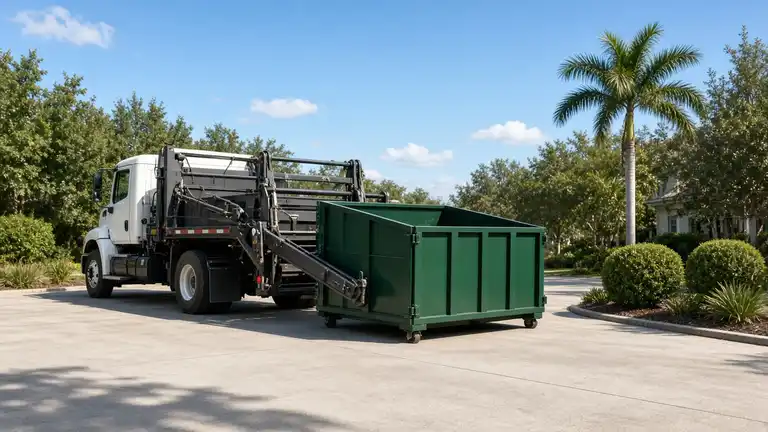
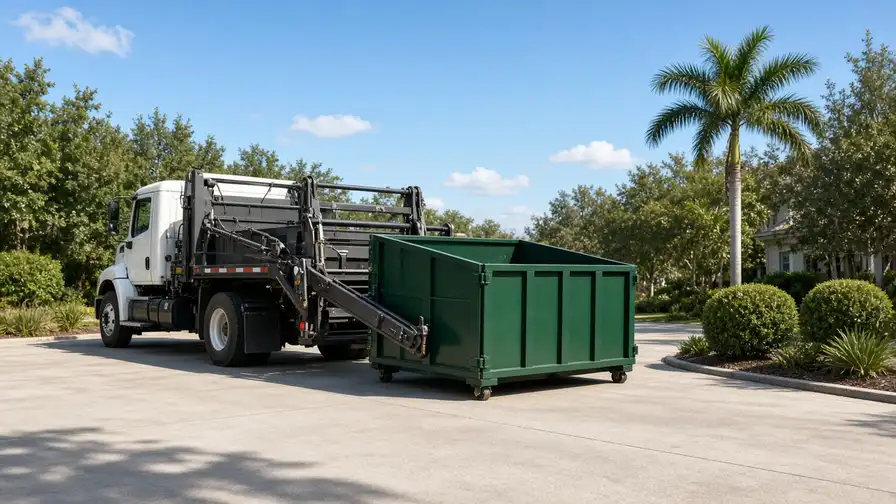
These are general planning examples, not a promise of availability or material acceptance. Describe your actual debris before selecting a roll-off dumpster size.
10 Yard Dumpster
A 10 yard dumpster is often considered a small dumpster rental. It may fit a garage or attic cleanout, bathroom remodel, flooring removal, small landscaping cleanup, or limited roofing debris.
Ask whether dense materials require a special load plan and whether the container dimensions fit your driveway.
15 Yard Dumpster
A 15 yard dumpster can add capacity without moving into the largest roll-off categories. Common planning uses include room renovations, estate cleanouts, moving cleanouts, cabinets, carpet, and moderate yard waste.
Actual length and wall height vary, so confirm loading access before delivery.
20 Yard Dumpster
A 20 yard dumpster is frequently considered for medium home renovations, larger cleanouts, roofing projects, flooring, deck material, and construction debris.
Discuss shingles, concrete, brick, dirt, tile, and other heavy debris separately because volume alone does not determine a safe load.
30 Yard Dumpster
A 30 yard dumpster may suit whole-home renovation debris, larger construction cleanups, demolition material, commercial cleanouts, and bulky waste.
A larger footprint and taller walls can affect placement and loading, so review truck access and how material will enter the container.
40 Yard Dumpster
A 40 yard dumpster is a high-volume category commonly associated with major construction, demolition, and large commercial projects where the site has substantial space.
Availability can be limited, and heavy debris may require a smaller dedicated container. Never choose this size by volume alone.
Not sure which size?
List the project areas, debris types, bulky items, and approximate square footage. Note the placement surface, access width, overhead clearance, and preferred rental dates.
That information is more useful than guessing from a generic dumpster-size chart.